Updated on June 16, 2026
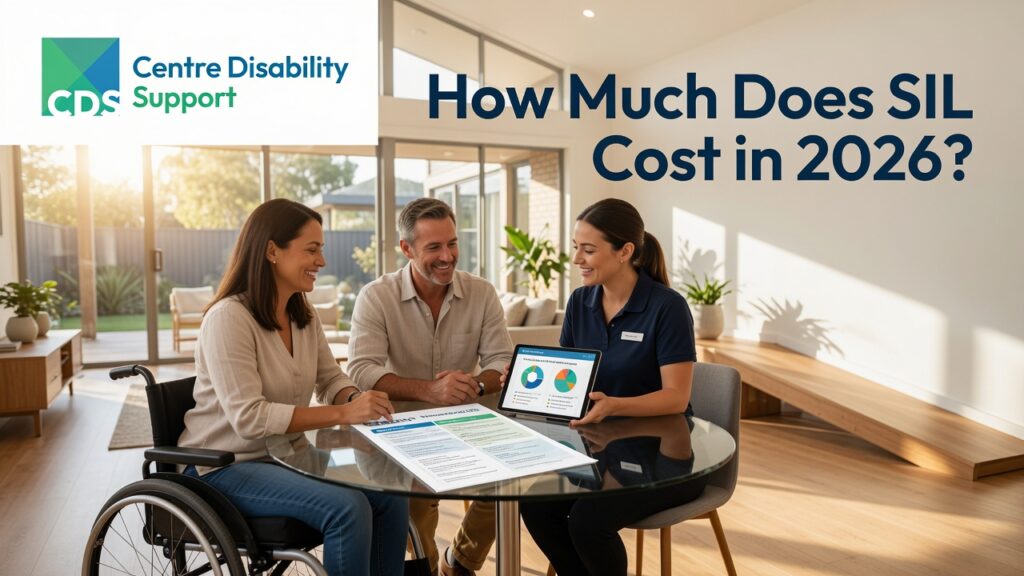
If you or a family member is exploring Supported Independent Living (SIL) through the NDIS, one of your first questions is likely: “How much will this actually cost?” The answer isn’t straightforward, because SIL costs vary enormously depending on individual support needs, living arrangements, and the intensity of care required.
This guide breaks down everything you need to know about SIL costs in 2026, from hourly rates and annual budgets to the approval process and upcoming regulatory changes.
What Is SIL and What Does the Funding Actually Cover?
Supported Independent Living is NDIS funding for support workers who assist participants with daily living tasks in their home, typically around the clock (National Disability Insurance Agency [NDIA], 2026a). SIL is designed for people with higher support needs who require some level of assistance 24 hours a day, 7 days a week.
What SIL funding covers:
- Personal care (showering, dressing, grooming, toileting, medication prompts)
- Meal preparation and eating support
- Household tasks (cleaning, laundry, shopping)
- Daily routine support and structured activities
- Overnight support (active overnight, sleepover, or wake-up assistance)
- Skill-building to develop independence
- Implementation of behaviour support plans
What SIL funding does NOT cover:
SIL is not housing. It does not pay for rent, mortgage payments, utility bills, groceries, or property maintenance. These costs remain the participant’s responsibility, typically covered through income, Disability Support Pension, Commonwealth Rent Assistance, or in some cases, Specialist Disability Accommodation (SDA) funding.
This distinction is critical. Many families mistakenly believe SIL covers the entire cost of living independently, when in reality it only funds the support workers who provide care within the home.
SIL Hourly Rates for 2025-26
The NDIA sets maximum hourly rates for SIL support through its annual Pricing Arrangements and Price Limits. For the 2025-26 financial year, the key rates are:
Standard weekday support: $70.23 per hour
High intensity support: $75.98 per hour (weekday)
Sleepover shift: $297.60 per shift (national rate)
Active overnight support: $78.81 per hour (standard weekday night rate)
These are the base weekday rates. Saturday, Sunday, evening (after 8pm), and public holiday rates are significantly higher, often 25-50% above standard weekday rates depending on the time and day (NDIA, 2025).
Standard vs High Intensity Support
The difference between standard and high intensity support is important for cost calculations. Standard support is appropriate for most SIL participants, where support workers have core qualifications and experience. High intensity support is reserved for participants with complex needs requiring workers with additional training in areas such as complex behaviour support, clinical care, or implementation of restrictive practices. To receive high intensity rates, providers must submit evidence of need when proposing the roster of care.
Overnight Support Costs
Most SIL participants require some form of overnight presence. The three main overnight support types have very different cost implications:
Sleepover support ($297.60 per shift): The support worker sleeps at the home and is available if needed. Up to two hours of active support is included in the sleepover rate. This is the most cost-effective overnight option for participants who generally sleep through the night but may occasionally need assistance.
Active overnight support ($78.81/hour standard rate): The support worker remains awake and actively supports the participant throughout the night. This is charged at the hourly night rate and is appropriate for participants requiring frequent repositioning, medication administration, seizure monitoring, or other active interventions.
Wake-up calls: Short bursts of support during the night, calculated on a case-by-case basis within the roster of care.
The choice of overnight support model can significantly impact annual SIL costs. A participant using sleepover support seven nights per week would incur approximately $108,000 annually just for overnight coverage, whereas active overnight support for the same period could cost $225,000 or more.
The Range of Annual SIL Costs: $80,000 to $500,000+
Annual SIL costs vary dramatically based on individual circumstances. According to current NDIS data and provider reports, SIL funding typically ranges from approximately $80,000 to over $500,000 per participant per year (Cortis et al., 2017; Wiesel et al., 2015).
Lower end ($80,000-$150,000): Participants in shared SIL arrangements with lower support needs, primarily using sleepover overnight support and sharing daytime support workers with other residents.
Mid-range ($150,000-$300,000): Participants requiring more intensive daytime support, some active overnight hours, or living in smaller shared arrangements (2-3 participants).
Higher end ($300,000-$500,000+): Participants with very high or complex support needs, requiring 1:1 support for most or all hours, active overnight support, high intensity rates, or living alone with dedicated support workers.
These figures represent the SIL funding component only. When combined with other NDIS supports (capacity building, assistive technology, therapy, community access), total plan values for SIL participants often exceed $500,000 annually.
How SIL Costs Are Calculated: The Roster of Care Process
Step 1: Evidence gathering
The participant, family, and support coordinator gather evidence of support needs, including allied health reports (particularly occupational therapy assessments), behaviour support plans, medical reports, and documentation of current care arrangements.
Step 2: Provider engagement
Once the NDIA indicates SIL may be appropriate, the participant engages with a registered SIL provider to develop a proposed support model.
Step 3: Roster development
The provider creates a detailed roster showing when support workers are needed across each day of the week, including shift types (standard, high intensity, sleepover), shift lengths, and support ratios (1:1, 1:2, etc.).
Step 4: Quote submission
The provider submits the roster to the NDIA along with supporting evidence explaining why each component is necessary and reasonable.
Step 5: NDIA review
The NDIA reviews the roster using its SIL Tool, which benchmarks the proposed costs against similar participants and assesses value for money (Carey et al., 2017).
Step 6: Negotiation and approval
The NDIA may negotiate with the provider on proposed hours or rates before approving the final SIL funding amount, which is then included in the participant’s NDIS plan.
This process ensures SIL funding is tailored to individual needs rather than being a one-size-fits-all allocation. However, it also means the approval timeline can be lengthy.
SIL vs SDA vs ILO
SIL (Supported Independent Living): Funding for support workers who provide daily living assistance in the home. This is about the people providing care, not the building itself.
SDA (Specialist Disability Accommodation): Funding for the housing itself—purpose-built or modified properties for participants with very high physical or behavioural support needs. SDA pays for the building; SIL pays for the workers inside it (NDIA, 2026b).
ILO (Individualised Living Options): A flexible package of supports designed around the participant’s choice of where and how they live. ILO is typically for participants who want more control over their living arrangements and don’t need 24/7 paid support (Laragy et al., 2020).
Some participants have both SIL and SDA in their plans—SDA covers the cost of the specialised housing, while SIL covers the support workers. However, most SIL participants do not have SDA funding and live in standard rental properties or family homes.
The 1 July 2026 Mandatory Registration Change
The most significant regulatory change affecting SIL in 2026 is the introduction of mandatory registration for all SIL providers, effective 1 July 2026. This change was announced by the Minister for the NDIS in December 2025 and represents a major shift in quality and safety oversight.
What this means:
- All providers delivering SIL must be registered with the NDIS Quality and Safeguards Commission
- Previously unregistered providers must apply for registration during the transition period or cease delivering SIL after 1 July 2026
- Platform providers (online marketplaces connecting participants and workers) are also subject to mandatory registration
- All SIL workers must hold a current NDIS Worker Screening Check
Why this matters for participants:
If your current SIL provider is unregistered, you may need to transition to a registered provider before or shortly after 1 July 2026. Registered providers are subject to stricter quality standards, regular audits, and enhanced complaint mechanisms, which should improve safety and service quality. However, the transition may cause disruption for some participants, and the pool of available providers may temporarily shrink as unregistered providers either gain registration or exit the market.
Families should confirm their provider’s registration status well before the deadline and work with their support coordinator to plan any necessary transitions.
How to Get SIL Approved: The 3-12 Month Timeline
Securing SIL funding is not a quick process. From initial request to funded SIL in your plan typically takes 3 to 12 months, depending on the complexity of needs, quality of evidence, and NDIA workload.
The typical pathway:
Months 1-2: Evidence gathering
Collect allied health reports, medical documentation, behaviour support plans, and detailed descriptions of current support arrangements. Engage a support coordinator (preferably Level 2 or Level 3) to guide the process.
Month 2-3: Home and Living Supports Request
Submit a formal Home and Living Supports Request form to the NDIA, clearly articulating why SIL is necessary and how it aligns with the participant’s goals.
Months 3-6: NDIA review
The NDIA’s Home and Living team reviews the request. They may request additional information or assessments. This stage can be lengthy and requires patience and persistence.
Months 6-9: Provider engagement and roster development
If the NDIA indicates SIL is appropriate, engage with registered SIL providers to explore options and develop a proposed roster of care.
Months 9-12: Quote submission and negotiation
The chosen provider submits the roster and quote to the NDIA. Negotiation may occur before final approval.
Month 12+: Plan implementation
Once approved, SIL funding is included in the participant’s plan, and services can commence.
This timeline can be shorter with strong evidence and straightforward needs, or longer if the NDIA requests additional assessments or if there are disagreements about the level of support required.
Practical Tips for Families Navigating SIL Costs
- 1. Start early: Given the lengthy approval timeline, begin exploring SIL options at least 12 months before you anticipate needing the support.
- 2. Invest in quality evidence: Comprehensive occupational therapy assessments and behaviour support plans significantly strengthen your case and can expedite approval.
- 3. Understand shared vs individual arrangements: Shared SIL homes are substantially more cost-effective than individual arrangements. If your family member can live successfully with others, this may make SIL more accessible.
- 4. Question the roster: Don’t simply accept the first roster a provider proposes. Ask questions about why each shift is necessary, whether support ratios are appropriate, and whether there are opportunities to build independence over time.
- 5. Plan for non-SIL costs: Remember that SIL doesn’t cover rent, food, utilities, or household items. Budget for these separately, and explore Commonwealth Rent Assistance and other income support options.
- 6. Review annually: SIL should be reviewed at least annually. As participants build skills, support needs may decrease. Conversely, if needs increase, the roster should be adjusted accordingly.
- 7. Confirm provider registration: With mandatory registration coming into effect on 1 July 2026, verify that any provider you’re considering is registered or actively pursuing registration.
Centre Disability Support: Your Trusted SIL Partner
As an NDIS Registered SIL provider, Centre Disability Support delivers high-quality Supported Independent Living services across Brisbane, Perth, Melbourne, Sydney, Gold Coast, Rockhampton, Gladstone, Townsville, and Toowoomba. Our experienced team understands the complexities of SIL funding and works closely with participants and families to develop rosters of care that genuinely meet individual needs while ensuring value for money.
Whether you’re just beginning to explore SIL options or need to transition to a registered provider before the 1 July 2026 deadline, Centre Disability Support is here to guide you through every step.
Contact Centre Disability Support today:
Phone: 1300 433 661
Email: [email protected]
Let us help you understand SIL costs, navigate the approval process, and create a living arrangement that supports your goals, your independence, and your quality of life.
RELATED ARTICLES
Choosing SIL or ILO: 8 Key Questions for Logan and Ipswich Families
Finding the Right SIL Home in Ipswich, QLD
Finding the Right SIL Home in Logan, QLD
SIL Support Models: 24/7 Care vs Drop-In Support
References
- Carey, G., Malbon, E., Reeders, D., Kavanagh, A., & Llewellyn, G. (2017). Redressing or entrenching social and health inequities through policy implementation? Examining personalised budgets through the Australian National Disability Insurance Scheme. International Journal for Equity in Health, 16(1), Article 192. https://doi.org/10.1186/S12939-017-0682-Z
- Cortis, N., Macdonald, F., Davidson, B., & Bentham, E. (2017). Reasonable, necessary and valued: Pricing disability services for quality support and decent jobs. Social Policy Research Centre, UNSW Sydney.
- Laragy, C., Fisher, K. R., Purcal, C., & Jenkinson, S. (2020). Choice, control and individual funding: The Australian National Disability Insurance Scheme. In Disability in the Global South (pp. 121-136). Springer. https://doi.org/10.1007/978-3-030-35683-5_7
- National Disability Insurance Agency. (2025). NDIS pricing arrangements and price limits 2025-26 (Version 1.1). Australian Government. https://www.ndis.gov.au/providers/pricing-arrangements
- National Disability Insurance Agency. (2026a). What is supported independent living (SIL). Australian Government. https://www.ndis.gov.au/participants/home-and-living/types-home-and-living-supports/what-supported-independent-living-sil
- National Disability Insurance Agency. (2026b). What is specialist disability accommodation (SDA). Australian Government. https://www.ndis.gov.au/participants/home-and-living/types-home-and-living-supports/what-specialist-disability-accommodation-sda
- Wiesel, I., Laragy, C., Gendera, S., Fisher, K. R., Jenkinson, S., Hill, T., Finch, K., Shaw, W., & Bridge, C. (2015). NDIS, housing assistance and choice and control for people with disability (AHURI Final Report No. 258). Australian Housing and Urban Research Institute. https://doi.org/10.18408/AHURI-7105301