Updated on June 8, 2026
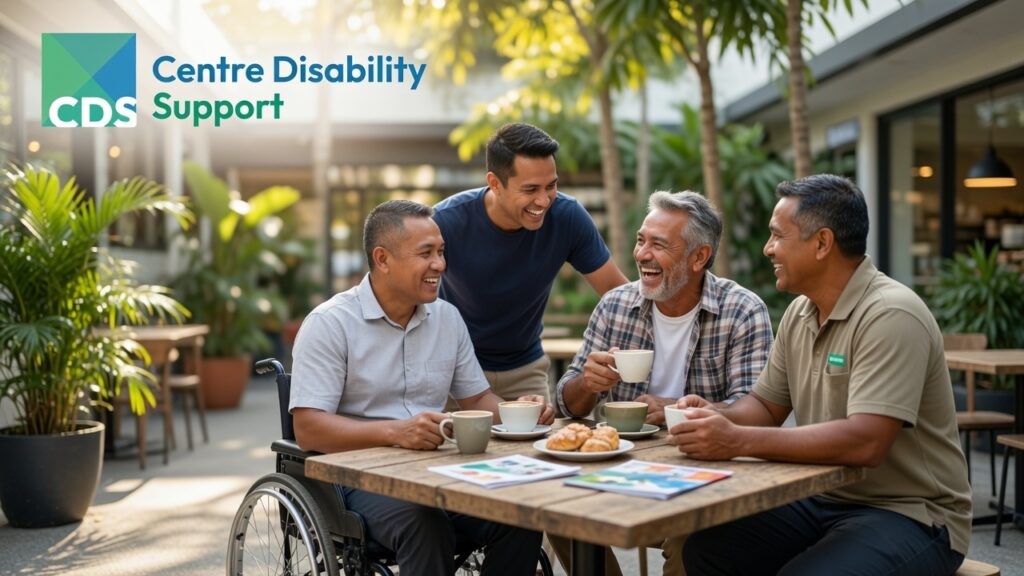
Australian men with disability face a unique challenge: while mateship and connection are core cultural values, traditional masculine norms make it difficult to ask for help. This article explores practical pathways to support through the NDIS, peer networks, and community participation.
The “She’ll Be Right” Culture and the Mateship Paradox
Australian culture celebrates mateship—loyalty, camaraderie, and mutual support. Yet the “she’ll be right” attitude often discourages men from admitting vulnerability. This paradox is particularly harmful for men with disability, whether acquired through injury or present from birth.
Research shows men are less likely than women to seek help for health concerns (Kwon et al., 2023). While men comprise approximately 60% of NDIS participants (Migliorini et al., 2022), many remain socially isolated. Men value connection, but traditional masculine norms around stoicism and independence make reaching out difficult (Bonell et al., 2022).
The Real Barriers Men with Disability Face
Stigma remains a significant barrier. Men fear being judged or perceived as weak if they admit needing support (Guaresi et al., 2023). Traditional masculine norms emphasise self-reliance and emotional control—qualities that can feel threatened by disability (Bonell et al., 2022).
For men with acquired disabilities like spinal cord injury or brain injury, identity disruption can be profound. Lim et al. (2025) found loneliness among men is a preventive health priority, with social isolation linked to poorer health outcomes. Men often experience loss of social roles—as workers, providers, or athletes—central to their sense of self.
Many men don’t want to burden others (Yu, 2023), particularly in rural areas where services are limited. Research shows peer support helps men navigate transitions (Barclay et al., 2022), yet many resist engaging because they associate support services with loss of control. Bonell et al. (2022) found men in regional Australia often lack access to social activities aligning with masculine identity. For CALD men and Aboriginal and Torres Strait Islander men, additional barriers include language, cultural stigma, and lack of appropriate services.
What “Mateship Support” Looks Like in Practice
Peer support connects people with lived disability experience. Research shows it reduces isolation, improves mental health, and provides practical guidance (Isaacs et al., n.d.). For men, peer support offers a non-clinical, strength-based approach aligning with values of mutual help (Sharp et al., 2024). Barclay et al. (2022) found videoconferencing peer support for men with spinal cord injury effectively reduced isolation, particularly for rural men.
Men’s Sheds offer spaces for practical activities while building friendships. Research shows Men’s Shed engagement improves wellbeing and reduces loneliness (McEvoy et al., 2023). For men with disability, adapted sports and social clubs maintain identity through activity and camaraderie. Community participation is core to wellbeing. Evans et al. (2024) highlight that social participation links closely to support, enabling men to engage in sporting events, hobby groups, volunteering, or cultural activities.
NDIS Funding for Social Connection
The NDIS recognises social connection as essential. Support Category 4—Assistance with Social, Economic and Community Participation—funds support workers for attending social activities, transport, assistance developing social skills, support joining clubs, and peer support programs.
To access it, include social participation goals in your NDIS plan. Be specific: “I want to join a disability sports team and need support attending training” or “I want to reduce isolation by attending a men’s peer support group weekly.” If funding is inadequate, request a plan review.
Mental Health and Men with Disability
Men with disability experience significantly higher rates of depression, anxiety, and suicidality. Migliorini et al. (2022) found men with psychotic disorders and moderate-to-severe disability were nearly 40% more likely to report inadequately met social needs.
Traditional masculine norms discourage emotional expression, while disability disrupts masculine identity (Bonell et al., 2022). This creates “double stigma” making it difficult for men to seek mental health support. Loneliness and social isolation are significant risk factors for poor mental health (Botha et al., 2024; Lim et al., 2025).
Early intervention prevents escalation. However, men often wait until crisis (Kwon et al., 2023). Peer support, community programs, and telehealth provide entry points for men who might not engage with traditional clinical services.
Psychosocial Recovery Coaches and Support Workers
Psychosocial Recovery Coaches are NDIS-funded supports helping people with psychosocial disability achieve recovery goals. For men, Recovery Coaches provide one-on-one support developing coping strategies, assistance with goal setting, support engaging with community networks, and coordination with health services.
Support workers can facilitate male social connection beyond task assistance by supporting attendance at social activities, building relationships, engaging with peer networks, and pursuing hobbies. Research shows support workers understanding gendered dimensions of disability are more effective in engaging men (Sharp et al., 2024).
Breaking the Isolation Cycle
Connect with peer support groups through disability organisations, online communities for your specific disability, or accessible Men’s Sheds. Try wheelchair basketball, rugby, or tennis; adaptive cycling, swimming, or athletics; or recreational programs like adaptive golf.
In 2026, online communities offer valuable connection, particularly for rural men or those with mobility limitations. Social media groups, virtual peer support, and accessible apps connect you with others sharing your experiences. Volunteer with local organisations, join hobby groups, attend cultural or sporting events, or participate in advocacy opportunities.
Self-Advocacy: Telling Your NDIS Planner You Want Social Connection Goals
Before your planning meeting, reflect on your current social situation, identify specific activities you’d like to join, and gather evidence of isolation’s impact on wellbeing. During your meeting, be honest about isolation’s impact on mental health, explain how connection supports overall wellbeing, provide specific activity examples, and ask about Support Category 4 funding. If funding is inadequate, request a plan review and seek support from an advocate or Support Coordinator.
2026 Context and Cultural Considerations
In 2026, there’s growing recognition that disability is experienced differently by gender, requiring gender-responsive services. NDIS reforms increasingly focus on community participation, social connection, and psychosocial support. Research continues highlighting peer support and accessible mental health services’ importance (Sharp et al., 2024). Digital tools, telehealth, and online communities expand access, particularly for rural men.
CALD men face additional barriers including language, cultural stigma, and lack of appropriate services. Freak-Poli et al. (2024) found being born in non-English-speaking countries can weaken isolation-loneliness relationships, suggesting protective cultural factors. Services should provide culturally appropriate information, interpreters, and connect men with culturally specific peer networks.
Aboriginal and Torres Strait Islander men experience intersecting disability, cultural identity, and systemic disadvantage. Connection to culture, community, and Country is central to wellbeing. Services should respect cultural protocols, support connection to community and cultural activities, work with Aboriginal Community Controlled Health Organisations, and provide culturally safe, trauma-informed support.
Conclusion
Australian men with disability deserve support systems respecting their values, identity, and lived experience. By understanding barriers, creating accessible pathways to peer support and community participation, and advocating for social connection goals in NDIS plans, we can break isolation cycles and build more inclusive communities.
Whether you’re a man with disability, family member, or support worker, remember: asking for help isn’t weakness—it’s strength. Mateship is about being there for each other, including being there for yourself.
Centre Disability Support: Your Mateship Partner
At Centre Disability Support, we understand every disability journey is unique. As a registered NDIS provider across Brisbane, Perth, Melbourne, Sydney, Gold Coast, Rockhampton, Gladstone, Townsville, and Toowoomba, we provide compassionate, tailored care respecting your choice, dignity, and control.
Contact us today:
Phone: 1300 433 661
Email: [email protected]
Service Hours: 24/7
RELATED ARTICLES
MateShip Support – Men Supporting Men
NDIS Mental Health Support: Key Information for Participants
References
- Barclay, L., McDonald, R., Lentin, P., & Bourke-Taylor, H. (2022). Investigating the challenges and benefits of engaging in peer support via videoconferencing for people with spinal cord injury. International Journal of Environmental Research and Public Health, 19(8), 4585. https://doi.org/10.3390/ijerph19084585
- Bonell, S., Underwood, M., Rasmussen, B., & Seymour, J. (2022). “There’s no sewing classes, there’s no bedazzling seminars”: The impact of masculinity on social connectedness and mental health for men living in inner-regional Australia. Sex Roles, 87(9-10), 549-563. https://doi.org/10.1007/s11199-022-01329-7
- Botha, F., Butterworth, P., & Wilkins, R. (2024). Predictors of male loneliness across life stages: An Australian study of longitudinal data. BMC Public Health, 24(1), 1870. https://doi.org/10.1186/s12889-024-18770-w
- Evans, K., Barclay, L., Lentin, P., & McDonald, R. (2024). Understanding the interaction between support and social participation for people with physical disabilities: A scoping review protocol. BMJ Open, 14(1), e083102. https://doi.org/10.1136/bmjopen-2023-083102
- Freak-Poli, R., Ryan, J., Tran, T., Owen, A., Power, J. M., Berk, M., Stocks, N., Gonzalez-Chica, D., Lowthian, J., Fisher, J., Byles, J., & Reid, C. M. (2024). Understanding loneliness after widowhood: The role of social isolation, social support, self-efficacy, and health-related factors. Archives of Gerontology and Geriatrics, 119, 105692. https://doi.org/10.1016/j.archger.2024.105692
- Guaresi, L., Meurk, C., & Roennfeldt, H. (2023). Lessons from the field. The Ethnographic Edge, 5(1), 1-15. https://doi.org/10.24135/ee.v5i1.238
- Isaacs, A. N., Sutton, K., Hearn, S., Wanganeen, T., Dudgeon, P., & Reilly, R. (n.d.). Facilitating personal recovery in the community: A qualitative evaluation of a peer support group for adults with severe mental health challenges in rural Australia.
- Kwon, P., Batterham, P. J., Calear, A. L., Kazan, D., & Banfield, M. (2023). Understanding men’s engagement and disengagement when seeking support for mental health. American Journal of Men’s Health, 17(2), 15579883231157971. https://doi.org/10.1177/15579883231157971
- Lim, M. H., Rioseco, P., Hobbs, M. J., & Batterham, P. J. (2025). Understanding loneliness as a preventive health priority among men: Findings from an Australian population survey. Health Promotion Journal of Australia, 36(1), e70090. https://doi.org/10.1002/hpja.70090
- McEvoy, E., Coll-Planas, L., Montes, M. L. G., Visa, M., Leahy, S., Skelton, D. A., Kee, F., Tully, M. A., McDaid, D., & Kearns, A. (2023). Pathways from Men’s Shed engagement to wellbeing, health-related quality of life, and lower loneliness. Health Promotion International, 38(4), daad084. https://doi.org/10.1093/heapro/daad084
- Migliorini, C., Enticott, J., Callaway, L., Moore, S., Willer, B., & Olver, J. (2022). Self-reported needs of people living with psychotic disorders: Results from the Australian national psychosis survey. Frontiers in Psychiatry, 13, 1013919. https://doi.org/10.3389/fpsyt.2022.1013919
- Sharp, P., Bottorff, J. L., Hunt, K., Oliffe, J. L., Johnson, S. T., Dudley, L., & Caperchione, C. M. (2024). Men’s peer support for mental health challenges: Future directions for research and practice. Health Promotion International, 39(3), daae046. https://doi.org/10.1093/heapro/daae046
- Yu, K. (2023). Barriers to help-seeking for mental health issues in young rural males [Doctoral dissertation]. https://doi.org/10.34074/thes.5858