
Updated on June 6, 2026
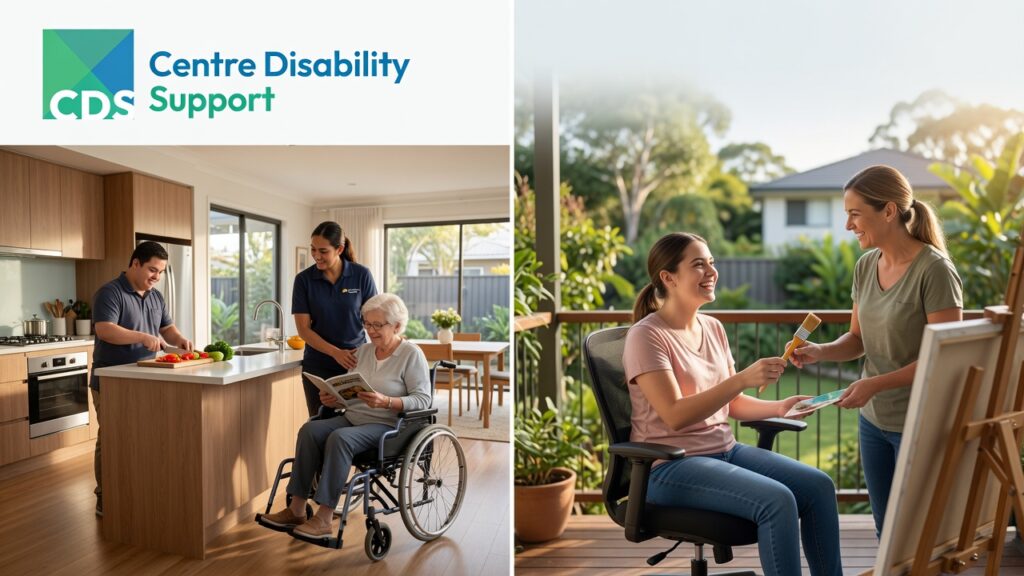
Choosing where and how you live is one of the most significant decisions you will make as an NDIS participant. The housing and support options available under the NDIS can feel overwhelming, particularly when navigating acronyms like ILO and SIL. Yet understanding these options is essential, as your living arrangement profoundly impacts your independence, wellbeing, and quality of life (Badji et al., 2025). This article provides a comprehensive guide to Individualised Living Options and Supported Independent Living, two distinct NDIS funding categories that support different approaches to disability accommodation in Australia.
What is Individualised Living Options (ILO)?
Individualised Living Options (ILO) is a flexible, participant-designed living support model that enables NDIS participants to make choices about where they live, who they live with, and how they receive support (National Disability Insurance Agency [NDIA], 2026). Unlike traditional disability accommodation models, ILO emphasises personalisation and community integration, allowing participants to create living arrangements that reflect their individual preferences, goals, and support needs.
ILO funding does not cover rent, mortgage repayments, or everyday living costs such as food and utilities. Instead, it funds the disability-related supports required to maintain your chosen living arrangement. These supports can work alongside other NDIS funding, mainstream services, and informal support from family, friends, and community networks.
ILO Eligibility Criteria
To be eligible for ILO funding, you must meet specific criteria established by the NDIA (2026):
- Be 18 years or older (or 17 years old and planning future living arrangements)
- Require support at home, either formal or informal, for at least six hours each day
- Be ready to explore your home and living needs, preferences, and available options
- Be willing to invest time and effort towards creating your future home
These criteria ensure that ILO is targeted towards participants who have substantial support needs but also possess the capacity and motivation to engage in the design process.
ILO’s Two-Stage Process
ILO operates through a structured two-stage process designed to ensure that your living arrangement is carefully planned and successfully implemented.
Stage 1: Exploration and Design (30 to 100 hours funded)
The first stage involves working with an ILO provider to explore and design a support package tailored to your needs. During this phase, you will decide where and how you want to live, what disability-related supports best suit your requirements, and who will provide those supports (NDIA, 2026). The NDIA funds between 30 and 100 hours for this exploration phase, with the exact allocation depending on the complexity of your support needs.
This stage is collaborative and person-centred, often involving family members, support coordinators, and other trusted individuals who know you well. At the conclusion of Stage 1, you must complete a service proposal that describes your ideal living situation within the approved budget. This proposal is submitted to the NDIA for approval before proceeding to implementation.
Stage 2: Implementation
Once your service proposal is approved, Stage 2 focuses on establishing your chosen living arrangement and putting the necessary supports in place (NDIA, 2026). The NDIA offers a plan implementation meeting to help you understand how to use your supports effectively. You then work with your chosen providers to operationalise your ILO arrangement.
ILO’s Three Support Components
ILO arrangements comprise three distinct types of support:
1. Primary Supports
Primary supports are people who live with you and provide the main support at home. These individuals are not related to you and may include:
- A host arrangement, where you live in someone else’s home and they provide support
- A housemate arrangement, where you share a home with another person who provides support
2. Supplementary Supports
Supplementary supports are additional supports that complement your primary support. These can be paid supports, such as a support worker providing overnight assistance, or unpaid supports, such as staying with a family member. Supplementary supports offer flexibility, allowing you to access extra or different support as circumstances change.
3. Monitoring and Adjustment
Regular monitoring ensures your ILO arrangement continues to work effectively. Your service proposal must include a plan specifying how often monitoring occurs, the format (phone or face-to-face meetings), how housemates and family contribute to monitoring, and how issues are identified and resolved.
What is Supported Independent Living (SIL)?
Supported Independent Living (SIL) is a structured, shared-home model that provides funding for daily support services to help NDIS participants live as independently as possible. SIL focuses on assistance with personal care (showering, dressing, eating), household tasks (cooking, cleaning, shopping), and skill development (Orion Care, 2024). Like ILO, SIL funding covers support services only, not accommodation costs.
SIL’s Roster of Care Model
SIL operates through a Roster of Care (RoC) model, where support workers are rostered to provide assistance according to a structured schedule. For participants with high support needs, this may include 24/7 support, ensuring that trained staff are always available to assist with daily living activities and respond to emergencies.
SIL is typically delivered in shared living environments, where multiple NDIS participants live together with rostered support staff. This model provides consistency, professional oversight, and the security of knowing that qualified support workers are readily available. However, it offers less flexibility than ILO in terms of choosing housemates or customising support arrangements.
Who is SIL For?
SIL is best suited for participants who require regular, ongoing support throughout the day and night. Research indicates that SIL arrangements can provide stability and structured care for individuals with complex needs, though the congregate nature of shared housing can present challenges related to choice, control, and compatibility with housemates (David et al., 2024; Dearn et al., 2022).
Participant-Led vs Provider-Led
The fundamental distinction between ILO and SIL lies in their underlying philosophy. ILO is participant-led and community-centred, placing you at the centre of decision-making about your living arrangement. You design the model, choose your housemates or host, and determine how supports are delivered. This approach aligns with the NDIS principle of choice and control, empowering participants to create living situations that reflect their values and preferences (Walker et al., 2025).
In contrast, SIL is provider-led and structured. The provider manages the roster, coordinates support workers, and maintains the shared living environment. Whilst participants have input into their support plans, the overall structure is determined by the provider’s operational model. This approach offers consistency and professional management but provides less flexibility for individualisation (Ausadvent Care, 2024).
ILO vs SIL: A Side-by-Side Comparison
| Feature | Individualised Living Options (ILO) | Supported Independent Living (SIL) |
|---|---|---|
| Focus | Participant-led, community-centred, highly personalised | Provider-led, structured, professionally managed |
| Funding | Funds disability-related supports (not accommodation) | Funds daily support services (not accommodation) |
| Structure | Flexible; host, housemate, or customised arrangements | Structured; shared living with rostered support workers |
| Support Model | Primary, supplementary, and monitoring supports; mix of formal and informal | Roster of Care model; professional support workers on scheduled shifts |
| Flexibility | High; you design the arrangement and choose who you live with | Moderate; provider manages roster and shared living environment |
| Who It Suits | Participants seeking independence with tailored support; willing to invest time in design | Participants needing regular or 24/7 professional support in a structured setting |
| Cost | Variable; depends on support design and hours required | Variable; depends on support hours and intensity of care |
When to Choose ILO vs When to Choose SIL
Choosing between ILO and SIL depends on your support needs, lifestyle preferences, and goals for independence.
Choose ILO if you:
- Value flexibility and want to design your own living arrangement
- Prefer a community-based, non-institutional living environment
- Are willing to invest time in the exploration and design process
- Want to blend formal paid supports with informal community and family support
- Seek greater control over who you live with and how support is delivered
Choose SIL if you:
- Require consistent, professional support throughout the day or night
- Prefer the security of rostered support workers and structured care
- Need 24/7 supervision or assistance with complex health or behavioural needs
- Value the stability and professional oversight of a provider-managed environment
It is important to note that neither option is inherently superior; the best choice depends on your individual circumstances, preferences, and support requirements (Oliver et al., 2025).
Can You Combine ILO with SDA or Other NDIS Supports?
Yes, ILO can be combined with Specialist Disability Accommodation (SDA) and other NDIS supports. SDA provides funding for the physical housing itself—specially designed or modified homes for participants with extreme functional impairment or very high support needs (Orion Care, 2024). Approximately 6% of NDIS participants are eligible for SDA, which covers features such as wheelchair accessibility, assistive technology, and emergency response systems.
ILO funding covers the supports you need within your home, whilst SDA funds the building. Many participants receive both SDA and ILO funding, enabling them to live in purpose-built accessible housing with personalised support arrangements. Similarly, ILO can work alongside other NDIS supports such as capacity building, community participation, and allied health services (NDIA, 2026).
The Role of Support Coordinators in Both Models
Support coordinators play a vital role in helping you navigate both ILO and SIL options. They assist with understanding your eligibility, gathering evidence from therapists and medical professionals, requesting appropriate funding categories in your NDIS plan, and connecting you with suitable providers (Walker et al., 2025). For ILO, support coordinators can help you through the exploration and design phase, ensuring your service proposal is comprehensive and aligned with NDIA requirements. For SIL, they can assist in finding providers, understanding rosters of care, and ensuring your support plan meets your needs.
Given the complexity of NDIS housing options and the significant impact of these decisions on wellbeing, engaging an experienced support coordinator is highly recommended (Malbon et al., 2022).
Practical Steps to Apply for ILO
If you are interested in pursuing ILO, follow these practical steps:
- Discuss with your support coordinator or NDIA planner: Explain your housing goals and interest in ILO. Ensure your NDIS plan includes or will include home and living supports.
- Gather evidence: Obtain reports from occupational therapists, doctors, and other professionals documenting your support needs and capacity to engage in the ILO process.
- Request ILO funding: At your next plan review, formally request ILO funding, specifying Stage 1 (Exploration and Design) funding.
- Find an ILO provider: Work with your support coordinator to identify an experienced ILO provider who can guide you through the exploration phase.
- Complete the exploration phase: Engage in the design process, exploring living options, support models, and potential hosts or housemates.
- Submit your service proposal: Complete the NDIA service proposal form detailing your proposed living arrangement, supports, and budget.
- Implement your arrangement: Once approved, proceed to Stage 2, establishing your living arrangement and activating your supports.
Common Misconceptions About ILO and SIL
Misconception 1: ILO and SIL are the same thing.
Reality: ILO is flexible and participant-led, whilst SIL is structured and provider-led. They serve different needs and offer different levels of control.
Misconception 2: SDA pays for support workers.
Reality: SDA funds the physical building only. Support workers are funded through SIL or ILO
Misconception 3: Everyone can access ILO.
Reality: ILO has specific eligibility criteria, including being 18 years or older and requiring at least six hours of support per day
Misconception 4: ILO is always cheaper than SIL.
Reality: Costs vary depending on support hours and complexity. ILO can be more or less expensive than SIL depending on your specific support design.
Misconception 5: You cannot change from SIL to ILO.
Reality: You can transition between models at a plan review if your needs or preferences change, though this requires careful planning and evidence.
Conclusion
Understanding the difference between Individualised Living Options and Supported Independent Living is essential for making informed decisions about your NDIS housing and support. ILO offers a participant-led, flexible approach that empowers you to design your own living arrangement, blending formal and informal supports in a community-centred model. SIL provides a structured, provider-led model with rostered professional support, offering consistency and security for participants with high or complex needs.
Neither model is universally better; the right choice depends on your individual support requirements, lifestyle preferences, and goals for independence. By understanding the eligibility criteria, processes, and philosophical differences between ILO and SIL, you can make a choice that truly supports your wellbeing and enables you to live the life you want.
If you are considering either option, engage with your support coordinator, gather professional evidence, and take the time to explore what each model offers. Your home is more than just a place to live—it is the foundation for your independence, community participation, and quality of life.
Looking for reliable and trustworthy NDIS Provider?
At Centre Disability Support, we offer tailored support services for individuals with disabilities throughout Australia. Whether you’re seeking support for yourself, a loved one, or simply wish to learn more about our services, we’re here to help.
Reach out to us today at [email protected] or Call 1300 433 661
RELATED ARTICLES
How to Apply for ILO Under the NDIS
Common Reasons ILO Requests Get Approved (and Rejected)
Case Planning for Complex ILO Participants
ILO Living Models: Host Living, Co-Residency, Living Alone, and Living Together
NDIS Funding for Individual Living Options (ILO)
Individual Living Options (ILO) for Every Stage of Life
4 Benefits of Individual Living Options (ILO) for People with Disabilities
References
- Ausadvent Care. (2024). NDIS ILO vs. SIL: Choosing the best living arrangement in Queensland. https://www.ausadventcare.com.au/blog/ndis-ilo-vs-sil-queensland-living-arrangements
- Badji, M., Kaambwa, B., Ratcliffe, J., Mulhern, B., Mpundu-Kaambwa, C., & Milte, R. (2025). The relative importance of key life domains for people with disability: Findings from a cross-sectional survey of NDIS participants in Australia. Quality of Life Research, 34, 1–13. https://doi.org/10.1007/s11136-025-04067-x
- David, C., Muir, K., Laragy, C., Carey, G., Malbon, E., Dickinson, H., Kavanagh, A., & Reeders, D. (2024). Experiences of people with disability living in permanent supportive housing in the context of the National Disability Insurance Scheme. Australian Journal of Social Issues, 59(2), 412–430. https://doi.org/10.1002/ajs4.378
- Dearn, B., Kavanagh, A., Soldatic, K., & Aitken, Z. (2022). Supported residential services as a type of “total institution”: Implications for the National Disability Insurance Scheme (NDIS). Australian Journal of Social Issues, 57(4), 862–879. https://doi.org/10.1002/ajs4.233
- Dearn, B., Soldatic, K., Kavanagh, A., & Aitken, Z. (2025). ‘Hurry up and get me out of here’: The experience of people under 65 years (still) stuck in aged care. Australian Journal of Social Issues, 60(1), 3–21. https://doi.org/10.1002/ajs4.70061
- Malbon, E., Carey, G., Dickinson, H., Reeders, D., Kavanagh, A., & Llewellyn, G. (2022). How personalisation programs can exacerbate socio-economic inequities: Findings from budget utilisation in the Australian National Disability Insurance Scheme. BMC Public Health, 22(1), Article 1050. https://doi.org/10.1186/s12889-022-13301-x
- National Disability Insurance Agency. (2026, May 11). What are individualised living options (ILO). https://www.ndis.gov.au/participants/home-and-living/types-home-and-living-supports/what-are-individualised-living-options-ilo
- Oliver, S., Aitken, Z., Kavanagh, A., Milner, A., & LaMontagne, A. D. (2025). An updated review of international literature on the outcomes of individualized housing for people with disability and complex needs. Disability and Rehabilitation, 47(5), 1234–1245. https://doi.org/10.1080/09638288.2025.2579487
- Orion Care. (2024). What’s the difference between SIL, SDA and ILO. https://orioncare.com.au/difference-between-sil-sda-and-ilo/
- Walker, R., Hutchinson, C., & Bigby, C. (2025). Adults with intellectual disability moving out of the family home using the National Disability Insurance Scheme: Family members’ planning experiences. Australian Journal of Social Issues, 60(1), 22–40. https://doi.org/10.1002/ajs4.70078