
Updated on June 6, 2026
What is Supported Independent Living (SIL)?
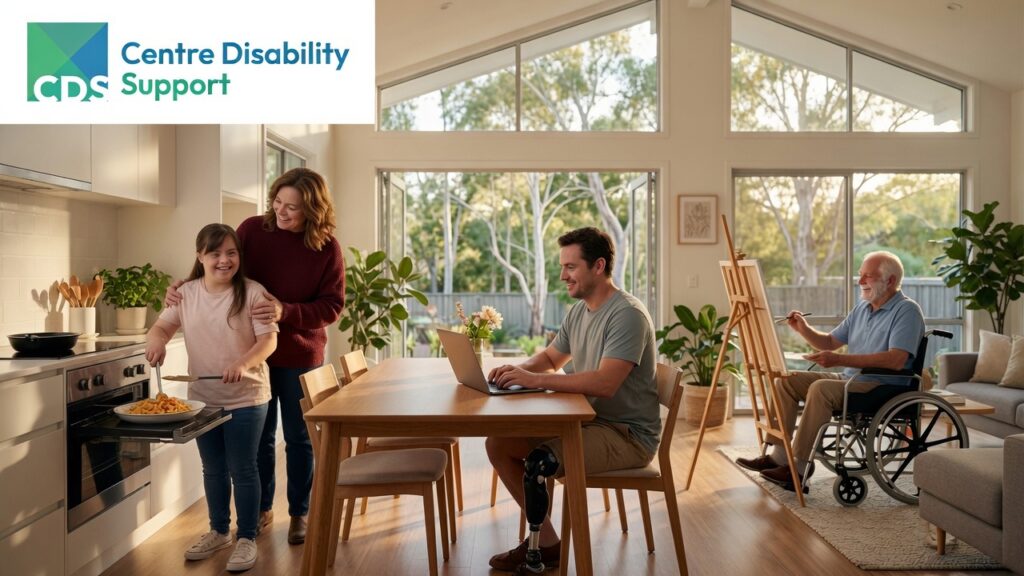
Supported Independent Living (SIL) is an NDIS-funded support that provides assistance with daily tasks to help participants live as independently as possible. It is crucial to understand that SIL is about the people, not the house. SIL funding covers the cost of support workers who assist you in your home; it does not cover rent, groceries, or utilities (A2Z Care Plus, 2026).
Research demonstrates that quality SIL arrangements can significantly enhance participant wellbeing, choice, and self-determination when properly implemented (Riches et al., 2025). However, the effectiveness of SIL depends heavily on careful provider selection, appropriate matching of housemates, and alignment between participant goals and service delivery models (Crowe et al., 2024).
SIL funding typically covers 24/7 support, personal care assistance, domestic help, capacity building, and community access support. Participants remain responsible for their Reasonable Rent Contribution (RRC), calculated as 25% of the Disability Support Pension plus 100% of Commonwealth Rent Assistance (A2Z Care Plus, 2026).
Why Logan City is an Excellent Location for SIL
The City of Logan, located in Queensland’s southeast corridor, offers NDIS participants an ideal combination of accessibility, affordability, and community connection. Logan’s diverse suburbs—including Holmview, Logan Central, Beenleigh, Springwood, and Browns Plains—provide varied housing options close to essential services, public transport, healthcare facilities, and recreational spaces.
Holmview, in particular, has emerged as a popular location for NDIS housing due to its tranquil environment, proximity to multiple reserves within 5 km, and well-designed accessible properties. The suburb offers spacious homes with modern amenities, onsite parking, and flexible SIL arrangements with 1:1 or 1:2 support ratios tailored to individual needs (Kuremara, 2025).
Logan Central provides excellent connectivity to shopping centres, medical services, and public transport hubs, making it convenient for participants who value independence and community participation. Beenleigh offers a mix of urban amenities and natural spaces, whilst Springwood and Browns Plains feature established communities with strong disability support networks and accessible infrastructure.
The region’s commitment to inclusive design aligns with contemporary disability housing standards, which emphasise not merely physical accessibility but also social inclusion and community participation (Martel et al., 2022). Logan’s growing network of NDIS providers ensures participants have genuine choice in selecting services that match their preferences and goals.
>>> NDIS Provider in Logan, QLD
The 2026 Mandatory Registration Requirement
A critical development for SIL participants in 2026 is the introduction of mandatory registration for all SIL providers from 1 July 2026. This regulatory change, announced by the Australian Government, requires all organisations delivering SIL services to be registered with the NDIS Quality and Safeguards Commission (A2Z Care Plus, 2026).
This mandatory registration represents a significant step toward protecting participants through stricter audits and higher standards of safety and care. If you are currently with an unregistered provider, it is essential to confirm their plans to achieve registration before the deadline to avoid service disruption.
The registration requirement reflects broader concerns about quality and safeguarding in disability service provision, particularly in shared accommodation settings where participants may be vulnerable (Hough et al., 2023). Research has highlighted the importance of robust regulatory frameworks in preventing restrictive practices and ensuring person-centred care (Dearn et al., 2022).
Your NDIS Funding in 2026
The PACE System
The NDIS has transitioned to a new computer system known as PACE, which impacts how SIL funding appears in your plan. Under PACE, SIL sits within your Core Supports, providing greater flexibility to use your budget according to your roster needs.
A critical change under PACE is the requirement to endorse your SIL provider as “My Provider.” This endorsement allows providers to claim payments directly; without it, they cannot receive payment for services delivered. Participants should work closely with their Support Coordinators to ensure proper provider endorsement.
Understanding the Roster of Care
The Roster of Care (RoC) is the foundation of your SIL funding. This document, created by your SIL provider and submitted to the NDIS, breaks down your support needs into 30-minute blocks across 24 hours, seven days a week.
The RoC details:
- 1:1 Support: When you require a worker dedicated solely to you (e.g., personal care, medical appointments)
- Shared Support: When one worker supports multiple residents (e.g., evening supervision)
- Irregular Supports: Funding for unplanned events, such as illness preventing day program attendance
Understanding your RoC is essential for ensuring your funding adequately reflects your actual support needs. Research indicates that inadequate funding and planning can shift the real costs of support to individuals and families, undermining the promise of genuine choice and control (Malbon et al., 2022).
Step-by-Step Checklist for Finding a SIL Home in Logan
Step 1: Update Your NDIS Plan and Set Housing Goals
Contact your Local Area Coordinator (LAC) or Planner to discuss your housing goals. Clearly articulate your desire to explore SIL options. Your plan should include funding for an Occupational Therapy assessment to investigate housing suitability
Be specific about your preferences: Do you prefer a quiet suburban setting like Holmview, or a more connected location like Logan Central? What are your non-negotiables regarding housemates, support ratios, and daily routines?
Step 2: Gather Evidence – Occupational Therapy Functional Capacity Assessment
Hire an experienced Occupational Therapist to conduct a Functional Capacity Assessment (FCA) specifically for housing. This assessment should use validated tools (such as the Vineland Adaptive Behavior Scales or WHODAS) to demonstrate your support needs and recommend SIL as the most appropriate option.
The FCA is the most critical document in your SIL application. It must clearly articulate why you require 24/7 support and why living independently without this support would be unsafe. If your primary disability is psychosocial or intellectual, a psychologist report may also be necessary (A2Z Care Plus, 2026).
Step 3: Understand Your Funding – Roster of Care, PACE System, Core Supports
Work with your Support Coordinator to understand how your SIL funding will be structured under the PACE system. Review the proposed Roster of Care carefully to ensure it reflects your actual needs, including:
- Morning and evening personal care routines
- Meal preparation and domestic assistance
- Community access and social participation
- Overnight support (active or sleepover)
- Irregular support for unexpected situations
Research demonstrates that participants who actively engage in planning and understand their funding arrangements experience better outcomes and greater satisfaction (Riches et al., 2025).
Step 4: Research Local Logan Providers
Investigate SIL providers operating in Logan City. Look for providers with:
- Current NDIS registration (essential from 1 July 2026)
- Established presence in your preferred Logan suburbs
- Positive reviews from current participants and families
- Transparent communication about their matching process and service model
Consider attending NDIS expos, speaking with other families, and consulting your Support Coordinator for recommendations. The quality of your provider significantly impacts your daily experience and long-term outcomes (Crowe et al., 2024).
Step 5: Inspect the Home and Assess Accessibility Features
When visiting potential SIL homes in Logan, systematically assess accessibility features:
External Access:
- Wheelchair-accessible entryways and ramps
- Level pathways from street to entrance
- Adequate outdoor lighting
- Secure, accessible parking
Internal Design:
- Wide doorways (minimum 850mm clear opening)
- Step-free showers with grab rails
- Accessible kitchen with adjustable features
- Sufficient circulation space for mobility aids
- Emergency call systems in bedrooms and bathrooms
Safety Features:
- Non-slip flooring throughout
- Appropriate lighting levels
- Secure windows and doors
- Fire safety equipment
Research confirms that accessible housing design is fundamental to enabling independence and reducing reliance on support workers for basic tasks (Martel et al., 2022). The physical environment should facilitate, not hinder, your daily activities.
Step 6: Meet Potential Housemates
One of the most critical factors in SIL success is housemate compatibility. Request opportunities to meet potential housemates before committing to a placement. Consider:
- Age and life stage compatibility
- Shared interests and lifestyle preferences
- Communication styles and social needs
- Daily routines and schedules
- Conflict resolution approaches
Research on shared disability accommodation emphasises that participants must negotiate safety, belonging, and agency within their living arrangements (Fraser-Barbour, 2023). A good provider facilitates gradual introductions through day visits, shared meals, and trial sleepovers before permanent placement (A2Z Care Plus, 2026).
Step 7: Review the Service Agreement
Carefully review the Service Agreement before signing. Key elements to examine include:
- Detailed description of services to be provided
- Staff qualifications and training requirements
- Complaint and feedback mechanisms
- Notice periods for service changes or exit
- Processes for reviewing and updating your Roster of Care
- Arrangements for house meetings and participant input
- Policies on visitors, personal belongings, and privacy
Ensure the agreement reflects person-centred principles and genuine choice and control. Research indicates that service agreements should clearly articulate participant rights and provider responsibilities to prevent misunderstandings and protect vulnerable individuals (Hough et al., 2023).
Step 8: Plan a Gradual Transition
A successful move into SIL requires careful transition planning. Work with your provider to develop a phased approach:
- Initial day visits to familiarise yourself with the home and housemates
- Shared meals to experience daily routines
- Overnight stays to assess comfort and compatibility
- Gradual increase in duration until permanent move-in
This gradual approach allows you to assess whether the placement genuinely meets your needs before making a full commitment. It also provides opportunities to identify and address any concerns early in the process.
Key Accessibility Features to Look for in a Logan SIL Home
When inspecting SIL properties in Logan suburbs, prioritise these accessibility features:
Mobility and Circulation:
- Minimum 1200mm turning circles in bathrooms and bedrooms
- Level thresholds throughout (maximum 5mm height difference)
- Reinforced walls for future grab rail installation
- Accessible light switches and power points (900-1100mm height)
Bathroom Design:
- Roll-in or step-free shower with slip-resistant flooring
- Adjustable-height shower head and hand-held option
- Grab rails positioned for safe transfers
- Accessible vanity with knee clearance
- Toilet with adequate circulation space
Kitchen Accessibility:
- Adjustable-height benchtops or varied work surface heights
- Pull-out shelves and accessible storage
- Side-opening oven or accessible microwave
- Lever-style taps and handles
- Adequate task lighting
Technology Integration:
- Smart home systems for lighting, temperature, and security control
- Emergency call systems connected to support staff
- Accessible communication devices
- Internet connectivity for telehealth and social connection
These features align with contemporary disability housing standards and Specialist Disability Accommodation (SDA) design guidelines, even when the property is not formally enrolled as SDA (Martel et al., 2022).
Questions to Ask Prospective Logan SIL Providers
When interviewing potential SIL providers in Logan, ask these essential questions:
1. “How do you match housemates, and what is your process for resolving incompatibility?”
- Quality providers use structured matching processes considering age, interests, personality, and support needs
2. “What happens if I don’t get along with a particular support worker?”
- Providers should offer roster flexibility and worker rotation to ensure good matches.
3. “How do residents participate in menu planning and household decisions?”
- Look for evidence of regular house meetings and genuine participant input into daily life.
4. “What is your staff turnover rate, and how long have current team members been with the organisation?”
- High turnover undermines consistency and relationship-building, which are essential for quality support.
5. “Are you registered with the NDIS Quality and Safeguards Commission, and are you prepared for mandatory registration from 1 July 2026?”
- Only work with providers who are already registered or have clear plans to achieve registration.
6. “How do you support participants to build skills and work toward their NDIS goals?”
- Quality SIL focuses on capacity building, not just supervision and care.
7. “What are your policies on restrictive practices, and do you use positive behaviour support approaches?”
- Providers should demonstrate commitment to least-restrictive practices and person-centred support.
8. “How do you facilitate community connection and social participation?”
- SIL should enable, not limit, community engagement and relationship-building.
Red Flags to Watch For
Be alert to these warning signs when selecting a Logan SIL provider:
- The “Vacancy Filler”: Providers who pressure you to move into an unsuitable home simply because they have an empty bed demonstrate a business-first rather than person-first approach
- High Staff Turnover: Frequent changes in support workers undermine relationship continuity and quality of care. Ask about staff retention rates and average tenure.
- Restrictive Practices Without Justification: Locks on cupboards, fridges, or bedrooms without clear behaviour support plan documentation may indicate inappropriate restriction of participant rights
- Lack of Participant Input: If current residents have no say in menus, activities, or household decisions, this suggests a provider-controlled rather than participant-directed model.
- Vague or Evasive Answers: Providers should be transparent about their processes, policies, and outcomes. Reluctance to answer questions or provide references is concerning.
- Unregistered Status: From 1 July 2026, working with unregistered providers will not be possible. Even before this date, registration status indicates commitment to quality and compliance.
- Inadequate Accessibility: Properties that do not meet basic accessibility standards will limit your independence and may require costly modifications.
- Research confirms that poor-quality SIL arrangements can replicate institutional models, restricting choice and autonomy rather than promoting independence (Bigby, 2024; Dearn et al., 2022).
Local Logan Community Connections
A quality SIL home in Logan should facilitate connection to local community resources, services, and recreational opportunities.
Transport Options:
- Logan Central Bus Station provides extensive public transport connections
- Beenleigh Train Station offers rail access to Brisbane and Gold Coast
- Accessible taxi and rideshare services
- NDIS transport funding for community participation
Healthcare Services:
- Logan Hospital (comprehensive emergency and specialist services)
- Numerous GP clinics and allied health practices throughout Logan suburbs
- Pharmacy services in all major shopping centres
- Dental and specialist medical services
Recreation and Leisure:
- Multiple parks and reserves within 5 km of most Logan suburbs
- Logan Entertainment Centre for arts and cultural events
- Accessible swimming pools and aquatic centres
- Community centres offering programs and activities
- Shopping centres including Logan Hyperdome, Grand Plaza, and Springwood Mall
Community Services:
- Logan City Council disability services and programs
- Local libraries with accessible facilities and programs
- Community support organisations and advocacy groups
- Faith communities and social groups
Proximity to these resources enhances quality of life and supports genuine community participation, which is a core objective of the NDIS (Riches et al., 2025).
Practical Checklist Summary
Use this checklist when evaluating SIL options in Logan:
Planning Phase:
- ☐ NDIS plan includes housing goals and OT assessment funding
- ☐ Functional Capacity Assessment completed by experienced OT
- ☐ Roster of Care reviewed and understood
- ☐ PACE system endorsement process understood
Provider Selection:
- ☐ Provider is NDIS registered (or will be by 1 July 2026)
- ☐ Provider has established presence in preferred Logan suburbs
- ☐ References checked with current participants/families
- ☐ Service Agreement reviewed by Support Coordinator
Property Inspection:
- ☐ Accessible entryways and circulation spaces
- ☐ Step-free shower with grab rails
- ☐ Accessible kitchen and living areas
- ☐ Emergency call systems installed
- ☐ Adequate natural light and ventilation
- ☐ Secure outdoor space
Housemate Compatibility:
- ☐ Met potential housemates in person
- ☐ Observed household dynamics and routines
- ☐ Discussed shared interests and lifestyle preferences
- ☐ Comfortable with communication styles
Service Quality:
- ☐ Staff qualifications and training confirmed
- ☐ Low staff turnover rate
- ☐ Regular house meetings scheduled
- ☐ Clear complaint and feedback processes
- ☐ Positive behaviour support approaches used
- ☐ Capacity building focus evident
Community Connection:
- ☐ Close to public transport
- ☐ Near healthcare services
- ☐ Access to parks and recreation
- ☐ Proximity to shopping and services
Conclusion
Finding the right SIL home in Logan, QLD, requires careful planning, thorough research, and systematic evaluation of providers and properties. By following this step-by-step checklist, NDIS participants and their families can make informed decisions that support genuine independence, safety, and quality of life.
The 2026 landscape offers both opportunities and challenges. The PACE system provides greater funding flexibility, whilst mandatory registration from 1 July 2026 promises enhanced quality and safeguarding. Logan City’s diverse suburbs—from tranquil Holmview to connected Logan Central—offer excellent options for accessible, community-integrated living.
Remember that SIL is about more than just accommodation; it is about creating a home where you can thrive, build skills, form relationships, and participate fully in community life. Take your time, ask questions, trust your instincts, and insist on arrangements that genuinely reflect your goals and preferences.
Quality SIL, properly implemented, can be transformative. With the right provider, the right home, and the right support, participants can achieve the independence and quality of life that the NDIS promises.
Looking for reliable and trustworthy SIL Provider in Logan?
At Centre Disability Support, we offer tailored support services for individuals with disabilities throughout Australia. Whether you’re seeking support for yourself, a loved one, or simply wish to learn more about our services, we’re here to help.
Reach out to us today at [email protected] or Call 1300 433 661
RELATED ARTICLES
What Daily Life Looks Like in a SIL Home
Best Accessible Beaches Near Gold Coast and Logan
SIL Support Models: 24/7 Care vs Drop-In Support
References
- A2Z Care Plus. (2026, January 13). The ultimate guide to Supported Independent Living (SIL) in 2026: Achieving true independence under the NDIS. https://a2zcareplus.com.au/supported-independent-living-sil-guide/
- Bigby, C. (2024). A flawed model or weak implementation? A critical review of the approach to group homes taken by the Disability Royal Commission. Australian Journal of Social Issues.
- Crowe, A., Tually, S., Faulkner, D., Slatter, M., & Oakley, S. (2024). Specialist Disability Accommodation in the social housing sector: Policy and practice. AHURI Final Report. https://doi.org/10.18408/ahuri8129801
- Dearn, B., Soldatic, K., & Dickinson, H. (2022). Supported residential services as a type of “total institution”: Implications for the National Disability Insurance Scheme (NDIS). Australian Journal of Social Issues, 57(4), 847–863. https://doi.org/10.1002/ajs4.233
- Fraser-Barbour, E. (2023). Negotiating safety, belonging and agency in shared disability accommodation: An Australian qualitative study. Disability & Society.
- Hough, J., Dickinson, H., & Carey, G. (2023). Building quality and safeguarding into disability service provision. In Disability Services in Australia (pp. 267–286). Springer. https://doi.org/10.1007/978-981-99-6143-6_14
- Kuremara. (2025, January 20). Queensland’s most accessible NDIS housing locations: Top picks for participants. https://kuremara.com.au/latest-news/queenslands-most-accessible-ndis-housing-locations-top-picks-for-participants/
- Malbon, E., Carey, G., & Reeders, D. (2022). How personalisation programs can exacerbate socio-economic inequities: Findings from budget utilisation in the Australian National Disability Insurance Scheme. BMC Public Health, 22(1), Article 1060. https://doi.org/10.1186/s12889-022-13301-x
- Martel, A., Boughen, N., & Martel, P. (2022). Human rights, disability, and construction: How responsive are building regulations to changing community attitudes towards housing for people with a disability? IOP Conference Series: Earth and Environmental Science, 1101(4), Article 042035. https://doi.org/10.1088/1755-1315/1101/4/042035
- Riches, V. C., Parmenter, T. R., Llewellyn, G., Hindmarsh, G., & Chan, J. (2025). The relationship between personal wellbeing, choice and NDIS individualised planning and support for people with intellectual disabilities. Journal of Applied Research in Intellectual Disabilities, 38(1), Article e70085. https://doi.org/10.1111/jar.70085