Updated on June 5, 2026
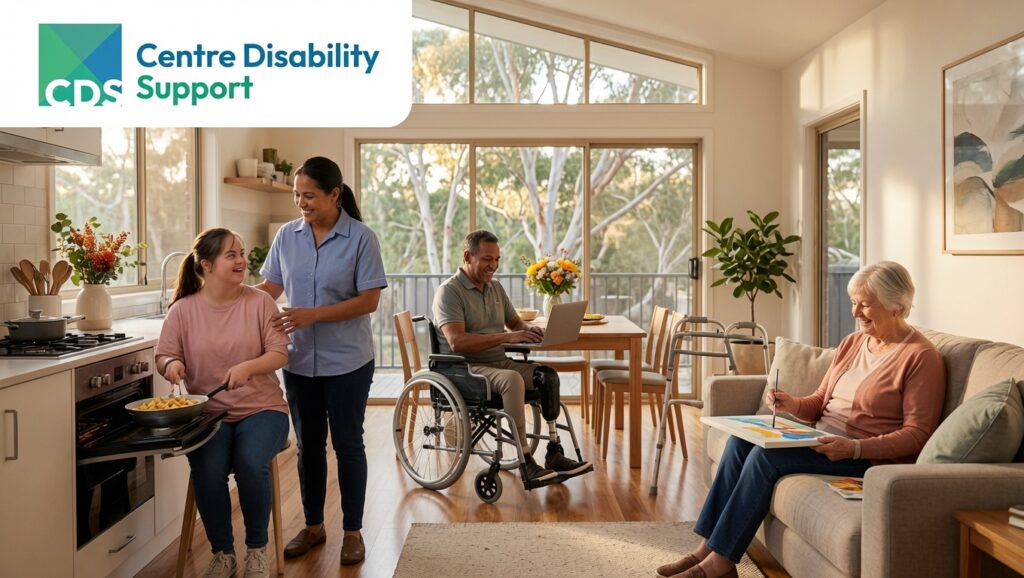
Supported Independent Living (SIL) sits at the intersection of housing, personal care, and individual autonomy within Australia’s disability support landscape. For many NDIS participants with high support needs, SIL represents a foundation for independence, community participation, and quality of life. The effectiveness of SIL hinges on its capacity to adapt to each person’s unique requirements—a principle embedded in the NDIS framework but realised through careful planning, skilled coordination, and responsive service delivery.
From 1 July 2026, all SIL providers must be NDIS-registered, marking a significant shift in the sector’s accountability landscape. This article examines how SIL adapts to personal requirements within this changing regulatory environment.
SIL Within the NDIS Framework
Supported Independent Living refers to help with daily tasks and activities provided to NDIS participants who live in shared or individual accommodation arrangements. Unlike Specialist Disability Accommodation (SDA), which funds the physical housing infrastructure, SIL funds the support workers who assist with personal care, meal preparation, household tasks, community access, and skill development.
The NDIS conceptualises SIL through an individualised funding model, where participants receive budgets for purchasing approved supports deemed “reasonable and necessary” within their individual plans. This market-based approach aims to foster individual-focused support that enhances independence and socioeconomic engagement. Participants can self-manage funds, use NDIA planners, or engage external brokerage services, providing flexibility for personalised SIL arrangements that respond to individual circumstances rather than imposing standardised service models (Designing Social Service Markets, 2022).
The Person-Centred Planning Process
Person-centred planning represents the cornerstone of individualised SIL arrangements. This process begins with NDIS plan development, where participants work with planners to articulate their goals, preferences, support needs, and life aspirations. The resulting NDIS plan allocates funding across support categories, including Core Supports (which typically fund SIL), Capacity Building, and Capital Supports.
Support coordinators play a pivotal role in translating NDIS plans into practical support arrangements. Research highlights the importance of skilled intermediaries who can navigate the complex provider market and advocate for participant preferences (McDonald et al., n.d.). Support coordinators assist participants in identifying suitable SIL providers, negotiating service agreements, and ensuring that support arrangements align with individual goals and cultural contexts.
The relationship between personal wellbeing, choice, and individualised planning has been empirically demonstrated. Riches et al. (2025) found significant associations between individualised planning processes and wellbeing outcomes for people with intellectual disabilities, underscoring the importance of genuine participant involvement in goal-setting and decision-making.
Tailoring SIL to Individual Needs
SIL arrangements must adapt to diverse disability types, each presenting distinct support requirements. For individuals with psychosocial disabilities, research demonstrates that individualised support budgets enable transitions from congregate care settings to more independent living arrangements, with funding flexibility allowing for personalised support configurations that address mental health needs alongside practical assistance (Cummins et al., n.d.).
For people with Multiple Sclerosis, housing and support arrangements require particular attention to progressive disability characteristics, with SIL services needing to accommodate changing mobility, fatigue management, and care needs over time (Cubis et al., 2024). Cultural considerations represent another critical dimension of personalisation.
Research examining NDIS supports for Aboriginal and Torres Strait Islander people highlights the necessity of culturally-specific adaptations within SIL arrangements, recognising that disability support cannot be separated from cultural identity, community connections, and culturally appropriate communication approaches (Lack et al., 2025).
The NDIS framework recognises that different disability types and demographic factors have distinct effects on support requirements and quality of life trajectories (Hashmi et al., 2024). Targeted interventions based on disability-specific needs can improve both support effectiveness and resource efficiency.
Support Intensities and Home Environments
SIL encompasses a spectrum of support intensities, from 24-hour active overnight support to periodic drop-in assistance. High-intensity SIL typically involves continuous staff presence, appropriate for individuals requiring frequent assistance with personal care, medication management, behaviour support, or safety monitoring. Research demonstrates that intensive support models can successfully accommodate complex requirements when properly resourced and staffed (AHURI, 2022). Medium-intensity arrangements might involve staff presence during waking hours with sleepover support overnight, while lower-intensity SIL might involve several visits per day or week.
The capacity to adjust support intensity over time represents a crucial adaptation mechanism. However, research reveals that budget utilisation patterns can exacerbate socio-economic inequities, with some participants struggling to access appropriate support levels due to planning or funding constraints (Malbon et al., 2022). This underscores the importance of regular plan reviews and responsive support coordination.
For shared SIL arrangements, housemate compatibility profoundly influences support quality and participant wellbeing. Effective matching considers communication styles, daily routines, social preferences, sensory sensitivities, and lifestyle interests. Research emphasises that social connections and compatible living arrangements are fundamental to preventing marginalisation and supporting community inclusion (Ellem et al., 2023).
The physical home environment must also adapt to individual requirements, including accessibility features, sensory considerations, assistive technology integration, and personalisation opportunities. The NDIS distinction between SDA (physical housing) and SIL (support services) can create coordination challenges, as optimal support arrangements require alignment between the built environment and support delivery models (Crowe et al., 2024).
The July 2026 Regulatory Change
From 1 July 2026, the Australian Government requires all SIL providers to hold NDIS registration. Delivering SIL without NDIS registration after this date will constitute a criminal offence, with substantial penalties for non-compliance. The mandatory registration requirement aims to improve safety and quality of care, increase oversight and accountability, and ensure providers meet consistent NDIS Practice Standards.
For participants, this change offers enhanced protections: registered providers must employ appropriately trained staff, maintain clear complaint and incident management processes, and submit to regular audits by the NDIS Quality and Safeguards Commission. However, the transition period presents challenges. Some providers may exit the market rather than pursue registration, potentially reducing choice in certain locations, particularly regional areas. Participants currently receiving SIL from unregistered providers must transition to registered providers, a process requiring careful planning to avoid disruption.
The NDIS Quality and Safeguards Commission serves as the independent regulator responsible for improving the quality and safety of NDIS supports and services. The Commission’s registration process requires providers to demonstrate compliance with NDIS Practice Standards, which cover areas including rights and responsibilities, governance and operational management, provision of supports, and support provision environment. For SIL providers, specific standards address the unique characteristics of shared living arrangements, including participant choice, privacy, dignity, and the prevention of violence, abuse, neglect, and exploitation.
Participants can lodge complaints with the Commission regarding registered providers, triggering investigation and potential compliance action. The Commission also manages reportable incidents, requiring providers to notify and investigate serious incidents and implement corrective actions. From July 2026, the Commission’s role in SIL quality assurance will expand significantly as all providers come under its regulatory purview.
Advocating for Personalised SIL
Participants and families can take several practical steps to advocate for SIL arrangements that genuinely reflect personal requirements.
During NDIS Planning: Clearly articulate goals, preferences, and support needs with specific examples. Request adequate SIL funding that reflects actual support intensity requirements, supported by evidence from current providers or allied health professionals. Ensure cultural, linguistic, and communication needs are documented. Request support coordination funding if needed.
When Selecting Providers: Verify provider NDIS registration status through the NDIS Commission’s Provider Register. Ask providers how they personalise support arrangements and accommodate individual preferences. Request information about staff training, particularly in areas relevant to your disability type or cultural background. Discuss housemate matching processes for shared arrangements. Review service agreements carefully, understanding notice periods, complaint processes, and participant rights.
In Ongoing Support Arrangements: Maintain regular communication with support coordinators about whether current arrangements meet your needs. Document concerns with specific examples. Request plan reviews if support needs change or current funding proves inadequate. Use the Commission’s complaint mechanism if direct communication with providers fails to resolve issues.
Navigating the July 2026 Transition: If your current provider is unregistered, initiate conversations about their registration plans immediately. Understand your service agreement notice period, typically 2-6 weeks. Begin exploring registered provider options early to maximise choice. Work with your support coordinator to plan transitions that minimise disruption.
Research emphasises that participants who actively engage in planning and decision-making, maintain clear communication with coordinators, and understand their rights and options achieve better support outcomes (McDonald et al., n.d.).
Conclusion
Supported Independent Living’s capacity to adapt to personal requirements represents both the promise and the challenge of the NDIS. The scheme’s individualised funding model and person-centred planning principles create the framework for genuinely personalised support arrangements. However, realising this potential requires skilled support coordination, responsive providers, appropriate funding, and participants’ active engagement.
The July 2026 mandatory registration requirement marks a significant evolution in SIL quality and safety protections. While the transition presents challenges, the long-term benefits of universal registration—consistent standards, enhanced oversight, and clearer complaint pathways—should strengthen the sector’s capacity to deliver personalised, high-quality support.
Ultimately, SIL adaptation to personal requirements depends on the alignment of multiple elements: NDIS plans that accurately reflect support needs and goals, skilled support coordinators who can navigate the provider market, providers committed to person-centred practice, and regulatory frameworks that balance quality assurance with flexibility and choice. As the NDIS continues to mature, maintaining focus on genuine personalisation remains essential to fulfilling the scheme’s promise of choice, control, and independence for people with disability.
Looking for reliable and trustworthy care services?
At Centre Disability Support, we offer tailored support services for individuals with disabilities throughout Australia. Whether you’re seeking support for yourself, a loved one, or simply wish to learn more about our services, we’re here to help.
Reach out to us at [email protected]
RELATED ARTICLES
What Is Person-Centered Support?
What is Personal Support for People with Disabilities?
Finding the Right NDIS Service Provider for Autism
NDIS Funding for Individual Living Options (ILO)
References
- Crowe, A., Batterham, D., Lawson, J., & Wiesel, I. (2024). Specialist Disability Accommodation in the social housing sector: Policy and practice. *AHURI Final Report*. https://doi.org/10.18408/ahuri8129801
- Cubis, L., Enticott, J., Callaway, L., Haines, T., & Blackberry, I. (2024). Using the Knowledge to Action framework to improve housing and support for people with Multiple Sclerosis. *Brain Impairment*. https://doi.org/10.1071/ib23102
- Cummins, R. A., Woerner, J., Weinberg, M. K., Collier, A., Hartley-Clark, L., & Perera, C. (n.d.). *The role of individualised support budgets in enabling people with psychosocial disability to transition out of private congregate care settings*.
- *Designing Social Service Markets: Risk, Regulation and Rent-Seeking*. (2022). https://doi.org/10.22459/dssm.2022
- Ellem, K., Wilson, J., Ware, R., & Chenoweth, L. (2023). Relationship-Based Practice with People with a Mild Intellectual Disability Who Have Been Socially Marginalised and Excluded. In *Social Work Practice with People with Intellectual and Developmental Disabilities* (pp. 109-130). Springer. https://doi.org/10.1007/978-981-99-6143-6_6
- Hashmi, R., Alam, K., & Gow, J. (2024). An investigation of the longitudinal trajectory patterns of health-related quality of life among Australians with disabilities: explaining disability types and properties. *Quality of Life Research*, *33*, 1857-1872. https://doi.org/10.1007/s11136-024-03683-3
- *Accommodating adults with intellectual disabilities and high support needs in Individual Supported Living arrangements*. (2022). *AHURI Final Report*. https://doi.org/10.18408/ahuri8124101
- Lack, C. W., Binks, B., Boserio, J., Dillon, M., Eikelboom, R. H., Swanepoel, D. W., & Brennan-Jones, C. G. (2025). Meeting the Needs of Aboriginal and Torres Strait Islander People With Hearing Loss in the Context of the National Disability Insurance Scheme. *Australian Journal of Social Issues*. https://doi.org/10.1002/ajs4.70014
- Malbon, E., Carey, G., & Reeders, D. (2022). How personalisation programs can exacerbate socio-economic inequities: findings from budget utilisation in the Australian National Disability Insurance Scheme. *BMC Public Health*, *22*(1), 1-13. https://doi.org/10.1186/s12889-022-13301-x
- McDonald, J., Hummell, B., Coleman, A., & Dew, A. (n.d.). *Barriers and Enablers for Effective Support Coordination in the National Disability Insurance Scheme*.
- Riches, V. C., Parmenter, T. R., Llewellyn, G., Hindmarsh, G., & Chan, J. (2025). The Relationship Between Personal Wellbeing, Choice and NDIS Individualised Planning and Support for People With Intellectual Disabilities. *Journal of Applied Research in Intellectual Disabilities*, *38*(1), e70085. https://doi.org/10.1111/jar.70085